The Broward County Attorney’s Office serves as the primary legal counsel for county government operations, while the state attorney handles criminal prosecution within the local justice system. Both offices support the structure of law enforcement and public governance across Broward County. This section focuses on the legal authority of the Broward County Attorney’s Office, its role in civil matters, and how the state attorney functions within the justice system as the main prosecution office. It also explains who depends on these legal bodies and why their work remains important for public administration.
The Broward County Attorney’s Office represents Broward County in all civil legal matters involving county departments and officials. It provides legal review for contracts, policy decisions, and regulatory compliance within the government structure. In parallel, the state attorney leads criminal case prosecution, working with law enforcement agencies to file charges and present cases in court. This separation of duties strengthens legal authority and maintains balance between civil governance and criminal enforcement. Both offices operate inside the broader justice system, supporting lawful decision-making and public accountability.
What is the Broward County Attorney’s Office?
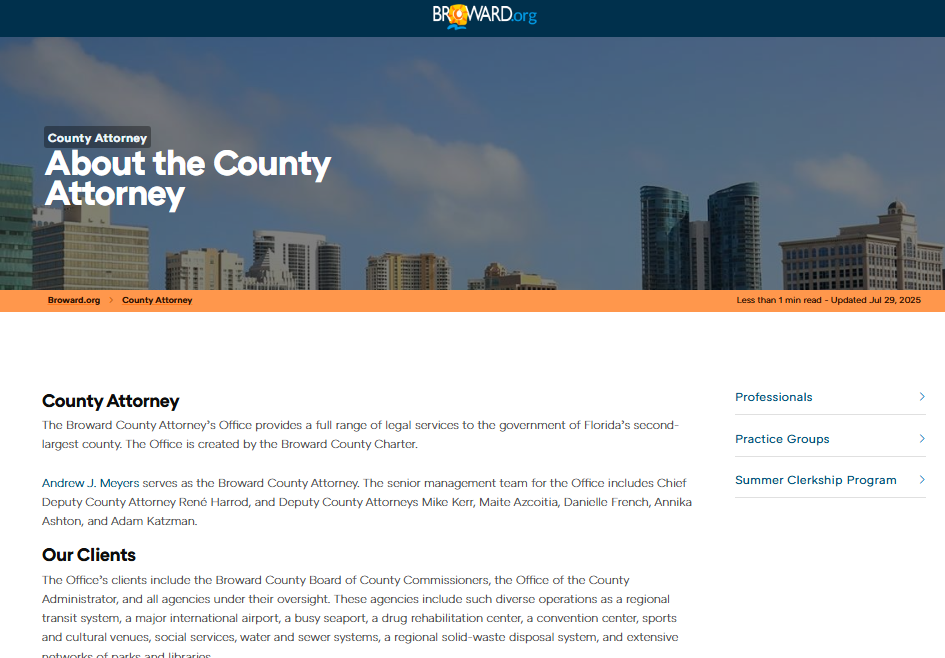
The Broward County Attorney’s Office serves as the legal arm of the county government, handling civil legal matters and advising officials. The state attorney runs the prosecution office, leading criminal cases https://www.broward.org/Legal/Pages/default.aspx within the local justice system. The Broward County Attorney’s Office represents Broward County in lawsuits, contracts, and policy decisions. It provides legal authority for county actions, helping departments stay within the law. This office works on civil matters, not criminal prosecution, and supports commissioners, agencies, and public programs.
What It Is and Why It Matters
The office plays a central role in the justice system at the county level. It drafts legal documents, reviews agreements, and defends the county in court. Clear legal advice helps avoid disputes and protects public funds. In contrast, the state attorney leads the prosecution office. This role focuses on criminal cases such as theft, assault, and fraud. Prosecutors review evidence, file charges, and present cases in court. Their work supports public safety and legal accountability.
Functions include:
- Legal representation in civil cases
- Contract review and policy support
- Risk management and compliance
- Criminal prosecution by the state attorney’s office
Who Uses It
Many groups rely on these offices for legal support and enforcement:
- County officials seek legal advice and decisions
- Law enforcement agencies are working with prosecutors
- Residents and businesses involved in civil disputes
- Victims and witnesses in criminal cases
A simple breakdown:
| Office | Main Role | Case Type |
|---|---|---|
| County Attorney | Legal advisor | Civil matters |
| State Attorney | Prosecutor | Criminal cases |
Both offices keep the legal system organized, fair, and active across Broward County.
Role of the State Attorney in Broward County
The state attorney in Broward County acts as the lead prosecutor in law enforcement legal matters. This office reviews evidence, files charges, and represents the public interest in criminal cases. It plays a central role in how criminal matters move through the court system. The position directly shapes how cases proceed from arrest to trial. It also influences outcomes in both felony prosecution and misdemeanor cases across Broward County.
Prosecutor Responsibilities in Criminal Cases
The state attorney’s office handles prosecution duties for a wide range of criminal matters. These duties connect law enforcement agencies with the court system through structured legal actions.
Responsibilities include:
- Reviewing arrest reports and police evidence
- Filing criminal charges in legal proceedings
- Managing witness preparation for hearings
- Presenting evidence during trial stages
- Handling plea negotiations with defense attorneys
In felony prosecution, prosecutors handle serious offenses such as robbery, assault, or major theft. These cases require a detailed evidence review and court presentation. For misdemeanor cases, the focus often stays on quicker resolutions, though legal standards remain strict.
Court Involvement and Case Decision-Making
The state attorney plays an active role inside Broward County courtrooms. Prosecutors present arguments, question witnesses, and respond to defense claims during hearings and trials.
Case decision-making often follows a structured review process:
| Stage | Prosecutor Action |
|---|---|
| Intake Review | Evaluate evidence from law enforcement |
| Charging | Decide criminal charges based on facts |
| Pre-Trial | Negotiate pleas or prepare trial strategy |
| Trial | Present evidence in court |
| Post-Trial | Handle sentencing recommendations |
During legal proceedings, prosecutors weigh evidence strength, witness reliability, and legal standards. These decisions affect whether cases proceed to trial or are resolved through agreements.
Legal Services Provided by the Attorney’s Office
The attorney’s office connected with the prosecution office provides a range of legal services related to court cases and public justice matters. These services focus on criminal prosecution, victim support, and new case filing processes handled through official legal action. These functions support fair case review, evidence handling, and structured court procedures across different types of legal matters.
Criminal Prosecution Services in the Prosecution Office
The prosecution office manages criminal prosecution work that involves formal legal action against violations of the law. Attorneys review court cases, examine evidence, and prepare filings for trial proceedings. This process connects law enforcement reports with courtroom presentation.
Functions include:
- Review of evidence review files from investigators
- Preparation of charges for criminal prosecution
- Court representation during hearings and trials
- Coordination with law enforcement agencies
- Evaluation of legal action based on case facts
In many court cases, prosecutors assess witness statements and digital records. They then build structured case files for presentation in court. The work supports the consistent application of law across different case types.
Criminal prosecution services often cover:
- Theft and property cases
- Assault and violent crime matters
- Fraud and financial crime reports
- Traffic-related legal violations with court referral
The prosecution office works with case records to maintain order in court procedures and legal documentation.
Victim Support and Case Filing Support
Victim support services assist in legal proceedings linked to criminal cases. These services help individuals involved in court cases stay informed about case filing progress and hearing schedules. Case filing support includes structured processing of legal documents submitted for court action. This process connects victims, investigators, and prosecutors within the legal system.
| Service Area | Function |
|---|---|
| Victim Support | Updates on court cases and hearing dates |
| Case Filing | Submission of legal complaints and reports |
| Legal Action Support | Coordination with prosecution teams |
| Documentation | Preparation of statements and records |
Victim support teams maintain communication during active legal action. They assist with case updates and procedural steps linked to prosecution office work.
How Criminal Cases Are Handled in Broward County
Criminal cases in Broward County follow a structured legal process that moves step by step from arrest to final judgment. Each stage in the court case handling system focuses on facts, evidence, and lawful review under the criminal prosecution framework. This process reflects the local legal process, trial system, and justice flow used across county courts.
Arrest and Case Filing in Criminal Prosecution
The process begins with an arrest made by law enforcement officers. After arrest, the person is booked, and basic information is recorded, including charges and incident details. Next, the case moves into formal case filing. Prosecutors review the arrest report and decide whether to move forward with criminal prosecution.
Actions in this stage include:
- Arrest record creation by police officers
- Booking and custody intake procedures
- Evidence collection from the incident scene
- Filing of charges by the state attorney’s office
- Initial case assignment to the court system
During this stage, court case handling starts forming the legal structure of the matter. The collected evidence plays a major role in how the case moves forward in the trial system.
Case Review and Court Hearings Process
After filing, the case enters a review stage. Prosecutors examine witness statements, reports, and physical evidence. Defense attorneys also begin preparation. The court then schedules hearings where both sides present arguments. These hearings set the direction of the case and test the strength of the evidence.
Main steps during this phase include:
- Preliminary review by legal teams
- Bail or detention decisions by the judge
- Pre-trial motions and evidence challenges
- Scheduled court hearings for both sides
- Witness statements and legal arguments
This stage reflects the justice flow in Broward County courts. Each hearing shapes how the trial system evaluates facts and legal claims before moving closer to a resolution.
Final Judgment and Case Resolution
The final stage leads to judgment after hearings or trial completion. A judge or jury reviews all presented facts and decides the outcome. Sentencing depends on the severity of charges, evidence strength, and legal statutes. Outcomes may include dismissal, probation, fines, or incarceration.
Final steps include:
- Closing arguments from the prosecution and the defense
- Jury deliberation or the judge’s decision
- Verdict announcement in court
- Sentencing based on legal standards
- Case closure in court records
This stage completes the court case handling cycle. The criminal prosecution process ends once the judgment is officially entered into the legal system.
Difference Between State Attorney and Defense Lawyers
A State Attorney represents the government in criminal cases, while defense lawyers represent the person accused of a crime. Both sides work within the court system but have opposite responsibilities and goals. In Broward County, these roles shape how cases move through the justice system and how legal arguments are presented by lawyers in Broward County, FL.
State Attorney Role in Broward County
The State Attorney acts as a prosecutor for the government. This office files charges and presents evidence in court against the accused person. Their work focuses on proving that a crime took place under Florida law. They work with police reports, witness statements, and forensic reports.
Responsibilities include:
- Reviewing arrest records and booking details
- Filing criminal charges in court
- Presenting evidence before a judge or jury
- Negotiating plea agreements
- Working with law enforcement agencies
The State Attorney does not represent the accused. Their role stays on the side of public prosecution and legal enforcement.
Defense Lawyers and Legal Representation Options
Defense lawyers represent people accused of crimes. They protect legal rights and respond to charges filed by the State Attorney. Legal representation can come from different types of defense counsel in Broward County:
| Type of Defense Lawyer | Role |
|---|---|
| Public Defender | Court-appointed lawyer for eligible defendants |
| Private Lawyer | Hired directly for defense representation |
Defense lawyers review evidence, question witnesses, and challenge prosecution claims. They may also negotiate reduced charges or alternative outcomes.
How to Contact the Broward County Attorney’s Office
The Broward County Attorney’s Office handles official legal communication for Broward County government departments and public agencies. Contact is used for legal questions, contract review requests, and formal public inquiries related to county operations. All communication is reviewed based on subject matter and routed to the correct legal division within the county system.
Contact Information and Office Details
The office provides official contact details through Broward County’s government directory. These are the most commonly listed contact points:
- Phone: 954-357-7600
- Email: countyattorney@broward.org
- Website: https://www.broward.org
- Address: Broward County Governmental Center, 115 South Andrews Avenue, Fort Lauderdale, FL 33301
These channels are used for formal communication such as legal notices, contract-related communication, policy interpretation requests, and inter-agency correspondence. Written submissions are preferred for record-keeping and proper review.
Office Hours and Best Time to Contact
The office operates during standard Broward County government business hours on weekdays.
- Office Hours: Monday to Friday, 8:30 AM – 5:00 PM
- Closed: Weekends and public holidays
- Best Time to Contact: 9:00 AM – 11:30 AM on weekdays
Morning hours often receive faster routing since staff are actively processing incoming legal requests. Email contact is commonly used for non-urgent public inquiries and written legal documentation, allowing proper tracking and response assignment.
FAQs About Broward County Attorney’s Office
The Broward County Attorney’s Office handles legal matters for county government operations and supports the local court system with legal advice and representation. It does not serve the public as a personal legal service office, but focuses on government-related legal help and case process management. Its work connects closely with public law, civil matters, and county decision-making.
What does the attorney’s office do?
The Broward County Attorney’s Office provides legal help to county departments and officials by reviewing laws, handling civil cases, and offering legal opinions. It supports county operations by checking contracts, policies, and legal risks linked to public services. The office mainly works on government representation instead of private legal issues. It also assists in maintaining compliance with state and local regulations. This role keeps county actions legally aligned within the court system framework.
Can I contact them directly?
Direct contact with the Broward County Attorney’s Office is limited for the general public since it mainly serves government agencies. Most communication happens through official county departments based on specific legal matters. Residents usually reach the office through formal county contact channels or public records requests. This structure helps maintain organized legal communication within the system. For personal concerns, other county offices may direct individuals to the correct department.
Do they provide legal defense?
The Broward County Attorney’s Office does not provide criminal defense or personal legal representation to individuals. Its focus stays on defending and advising the county in civil legal matters and public disputes. Residents needing defense services must contact private attorneys or public defender services. The office does not act as a lawyer for personal cases. Its legal help is strictly tied to county government responsibilities.
How are cases processed?
Case handling in the Broward County Attorney’s Office follows a structured legal process linked to county operations. Each matter begins with legal review, followed by consultation with relevant departments for accurate case evaluation. Legal documents are prepared and reviewed before any court-related action is taken. The office then manages responses and monitors ongoing legal proceedings. This case process helps maintain consistency and legal accuracy within the court system.